• MAIN PAGE
  • LATEST NEWS
    • Lost Cities
    • Archaeology's Greatest Finds
    • Underwater Discoveries
    • Greatest Inventions
    • Studies
    • Blog
  • PHILOSOPHY
  • HISTORY
  • RELIGIONS
    • Africa
    • Anatolia
    • Arabian Peninsula
    • Balkan Region
    • China - East Asia
    • Europe
    • Eurasian Steppe
    • Levant
    • Mesopotamia
    • Oceania - SE Asia
    • Pre-Columbian Civilizations of America
    • Iranian Plateau - Central Asia
    • Indus Valley - South Asia
    • Japan
    • The Archaeologist Editor Group
    • Scientific Studies
    • Aegean Prehistory
    • Historical Period
    • Byzantine Middle Ages
    • Predynastic Period
    • Dynastic Period
    • Greco-Roman Egypt
  • Rome
  • PALEONTOLOGY
  • About us
Menu

The Archaeologist

  • MAIN PAGE
  • LATEST NEWS
  • DISCOVERIES
    • Lost Cities
    • Archaeology's Greatest Finds
    • Underwater Discoveries
    • Greatest Inventions
    • Studies
    • Blog
  • PHILOSOPHY
  • HISTORY
  • RELIGIONS
  • World Civilizations
    • Africa
    • Anatolia
    • Arabian Peninsula
    • Balkan Region
    • China - East Asia
    • Europe
    • Eurasian Steppe
    • Levant
    • Mesopotamia
    • Oceania - SE Asia
    • Pre-Columbian Civilizations of America
    • Iranian Plateau - Central Asia
    • Indus Valley - South Asia
    • Japan
    • The Archaeologist Editor Group
    • Scientific Studies
  • GREECE
    • Aegean Prehistory
    • Historical Period
    • Byzantine Middle Ages
  • Egypt
    • Predynastic Period
    • Dynastic Period
    • Greco-Roman Egypt
  • Rome
  • PALEONTOLOGY
  • About us

The Secret Society of the Pythagoreans

December 4, 2025

Mysticism, Mathematics, and Philosophy in the Ancient World

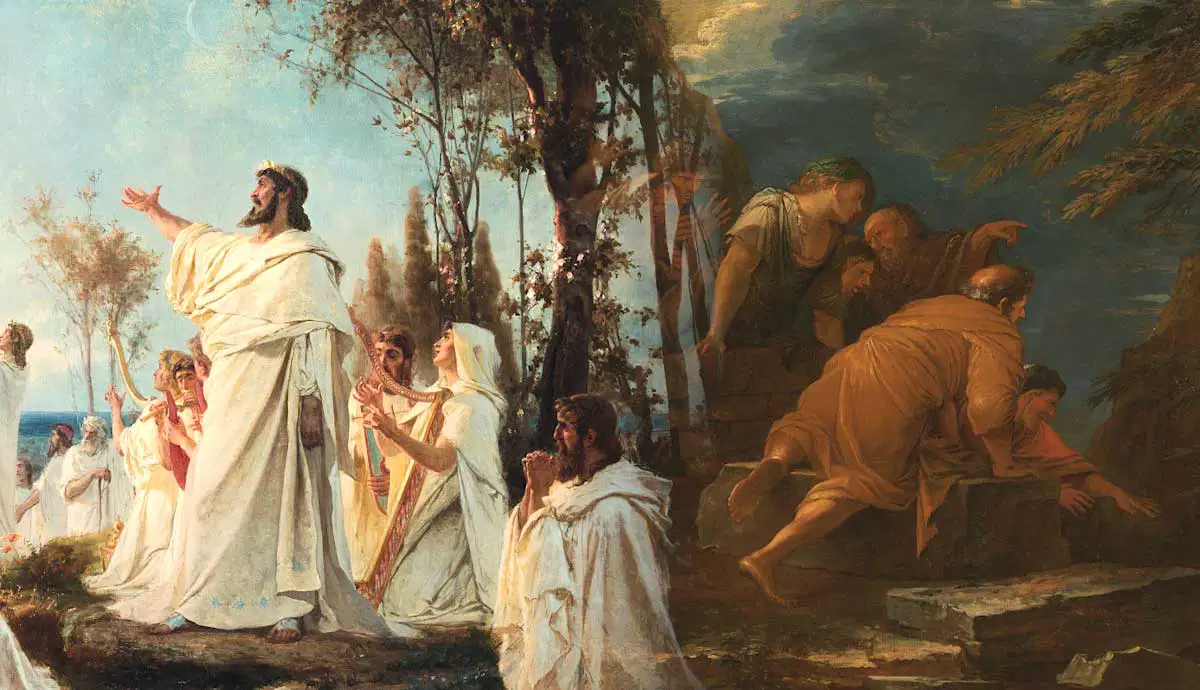
The Pythagoreans, founded by Pythagoras in the 6th century B.C., were more than mathematicians they formed a secretive society that combined spiritual teachings with rigorous study of numbers and the cosmos.

Numbers as Sacred Symbols
The Pythagoreans believed numbers held divine significance. They studied ratios, harmonics, and geometry to understand the universe. Music, astronomy, and mathematics were all seen as reflections of a cosmic order that could guide human life.

Rules of Membership
Pythagorean members followed strict codes, including communal living, dietary restrictions, and ritual practices. Harmony in daily life mirrored harmony in the universe, creating a disciplined, spiritually focused community.

Legacy of the Society
Their teachings influenced philosophy, science, and mystical traditions, linking logic and spirituality. The Pythagoreans’ belief in the power of numbers shaped centuries of thought, demonstrating the enduring connection between mathematics, philosophy, and spiritual insight.

← The Lost City of Helike: The Real Atlantis of GreeceThe Ancient Art of Tattooing: Symbols of Power and Protection →
Featured
image_2025-12-05_234812480.png
Dec 5, 2025
What can ancient Chinese texts teach us about solar eclipses and Earth's rotation?
Dec 5, 2025
Read More →
Dec 5, 2025
image_2025-12-05_234313849.png
Dec 5, 2025
Human history could be rewritten after boffins find bizarre 4,000-year-old burial site
Dec 5, 2025
Read More →
Dec 5, 2025
image_2025-12-05_233815974.png
Dec 5, 2025
Celebrated Rutland mosaic depicts ‘long-lost’ Troy story connecting Roman Britain to the ancient classical world
Dec 5, 2025
Read More →
Dec 5, 2025
image_2025-12-05_232843168.png
Dec 5, 2025
Exploring landscapes of power in early medieval East Anglia
Dec 5, 2025
Read More →
Dec 5, 2025
image_2025-12-05_232711121.png
Dec 5, 2025
Archaeologists Uncovered an Ancient Roman Funeral Pyre—And a Treasure Trove of Gold
Dec 5, 2025
Read More →
Dec 5, 2025
image_2025-12-05_232053508.png
Dec 5, 2025
Researchers Discover the Shocking Age of the Mysterious Pecos River Rock Art
Dec 5, 2025
Read More →
Dec 5, 2025
read more

Powered by The archaeologist